Your cart is empty.
Keep shopping
Python for Biologists in 2 Hours with Coding Exercises
5 students

Python for Biologists in 2 Hours with Coding Exercises
Learn Python through real biological examples. From coding basics to data analysis and visualization for scientists.
Created byLearn Loads
Last updated 11/2025
English
What you'll learn
- Understand the fundamentals of Python programming and how they apply to common biological data analysis tasks.
- Write and run Python scripts to handle, clean, and visualize biological datasets (e.g., sequences, gene expression data, microscopy measurements).
- Use key scientific libraries such as NumPy, pandas, and matplotlib to automate repetitive workflows and extract meaningful insights from biological data.
- Develop reproducible analysis pipelines and document results for collaboration and publication.
Explore related topics
Coding Exercises
This course includes our updated coding exercises so you can practice your skills as you learn.
See a demo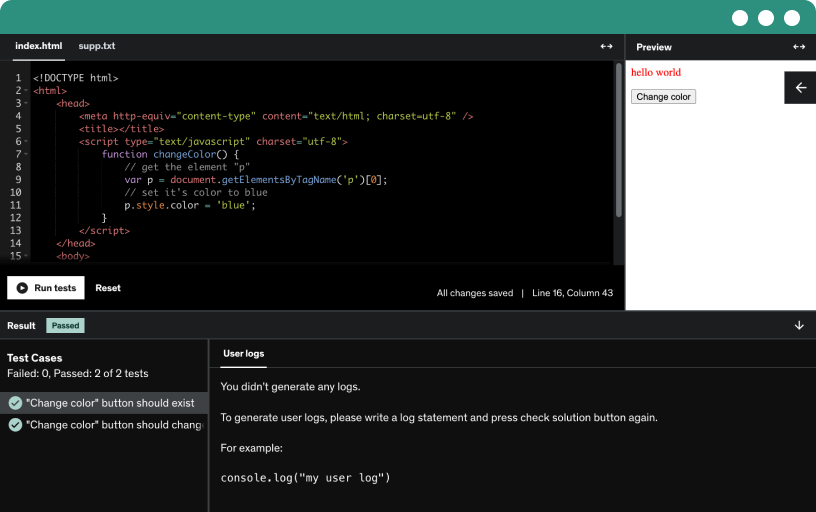
Course content
5 sections • 13 lectures • 6m total length
Requirements
- No programming experience needed. You will learn everything you need to know.
Description
This course is designed for biologists who want to add Python programming to their scientific toolkit—without getting lost in computer science theory. You’ll learn Python from the ground up, using real biological examples and datasets to make every concept relevant and immediately applicable.
We’ll start with the fundamentals: variables, data types, and control structures. From there, you’ll move into practical data handling—reading sequence files, analyzing experimental data, and visualizing results. Along the way, you’ll use essential libraries like NumPy, pandas, and matplotlib to automate repetitive tasks and make your analysis faster, cleaner, and more reproducible.
Throughout the course, you’ll complete hands-on exercises and small projects that mirror real-life research scenarios. You’ll parse DNA sequences, process experimental results, and visualize biological trends directly from your data. These practical examples ensure you’re not just memorizing code—you’re learning to think computationally as a biologist.
You’ll also learn how to structure your code for research: documenting your scripts, writing reproducible workflows, and preparing your results for collaboration or publication. By the end of the course, you’ll not only understand Python syntax—you’ll know how to use it to solve real biological problems.
No prior programming experience is required. If you’ve ever used Excel, R, or basic command-line tools, you’ll feel right at home. Whether you’re a student, researcher, or professional biologist, this course will give you the confidence to integrate coding into your day-to-day scientific work.
Who this course is for:
- Beginner Python developers
- Biologists and bioinformaticians
- Students and academics