
Your cart is empty.
Keep shopping
Mobile VR Virtual Reality & Artificial Intelligence in Unity
656 students
Mobile VR Virtual Reality & Artificial Intelligence in Unity
Learn to make mini games in this epic course, including Google Cardboard mobile VR and A Star algorithms for Unity.
Created byMammoth Interactive, John Bura
Last updated 3/2019
English
English [Auto],
What you'll learn
- Learn to code for game development in Unity C#
- Make a game that uses artificial intelligence in Unity 2017
- Use a path-finding algorithm
- Use the A* algorithm to make a 2D game in Unity
- Learn cutting-edge tools that will put you ahead of other game development
- Build 3D games in Unity® 5.4.3f1
- Understand the fundamentals of game design
- Create artwork in Blender
- Code in C#
Explore related topics
Coding Exercises
This course includes our updated coding exercises so you can practice your skills as you learn.
See a demo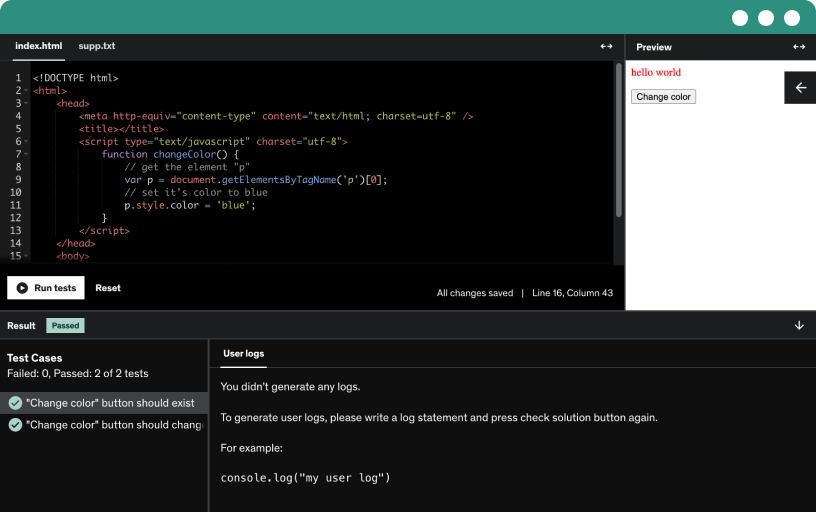
Course content
44 sections • 276 lectures • 82h 50m total length
Requirements
- Unity 2017 and 5.4
- We recorded on a MAC, but you can use a PC
Description
"I learned a lot with this course. It gives you a step by step guide to game design. If you have an idea on a game that you want to create, this course has many different games which provide you with practical knowledge and experience in coding." - Jessica O.
Learn to make mini games in this epic course, using Google Cardboard mobile VR and A Star algorithms for Unity. You'll also learn to make 3D art in Blender.
A wildly successful Kickstarter funded this course
First you will learn how to make a game that uses the A Star pathfinding algorithm. You will learn how to use the A Star algorithm to make a 2D game in Unity 2017.3. A Super Tank on a maze will find the best way to go to a point you click. The tank will collect objects along its path.
A* is also important to avoid dangers like a cliff while getting to a destination. As well - suppose a game's level has two paths. You can program your artificial intelligence player to think on its own. It can choose a better path to avoid monsters and other obstacles.
Our two very talented instructors, Kevin Liao and Glauco Pires, explain everything from a basic, beginner level. That means, you don't have to have any prior coding or digital art experience to succeed here.
For each VR game, Glauco Pires will take you through the process of coding the game in Unity® 5.4.3f1 from scratch.
Kevin Liao will teach you how to create all the artistic elements you will need to complete the game. For 3D modeling you will learn to use the amazing free program Blender.
We really hope you decide to purchase this course and take your knowledge to the next level!
Who this course is for:
- Complete beginners
- People who want to be game developers
- Developers who want to make games with smart automated features