
Your cart is empty.
Keep shopping
Generative AI - The Ultimate Guide!
6,541 students
Generative AI - The Ultimate Guide!
Master the core concepts of GenAI and advanced techniques in - ChatGPT, Prompt Engineering, Image Generation, AI Agents
Created byArjun Janananda
Last updated 9/2026
English
English [Auto],French [Auto],
What you'll learn
- Hands-on mastery of Gen AI. Working with multiple Generative AI tools- ChatGPT, Stable Diffusion, Llama and more
- Detailed concepts of Artificial Intelligence and workings under the hood of all types of Generative AI (Gen AI) Models
- Advanced prompt engineering for Multimodal engines to achieve precise and useful work from GenAI
- AI art generation and creation of photo realistic images of humans for free with Open source tools. - Create AI influencers, Marketing material, Design elements
- Advanced workflows with Generative AI such as RAG, Model Fine Tuning and AI Agents
- Work with ChatGPT like a pro with latest models- GPT 5 and others for content creation, data analysis, ideation, social media posts, productivity.
- Automate content generation for free through Open Source models
- Build apps powered by Gen AI - with APIs and also with AI models running locally on your computer
- Interview preperation to secure top jobs in the domain of Gen AI
- Implementing practical uses cases of Generative AI in organizations
Explore related topics
Coding Exercises
This course includes our updated coding exercises so you can practice your skills as you learn.
See a demo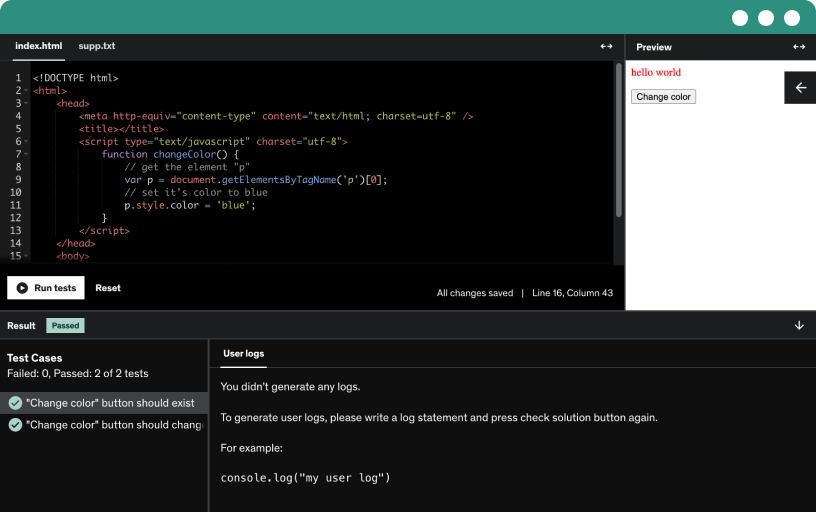
Course content
15 sections • 51 lectures • 5h 16m total length
Requirements
- No prior programming or technical knowledge required. The course is tailored for beginners who can follow along and learn
Description
This is the most comprehensive and hands-on course to learn all the concepts, tools, models and workings of Generative AI.
This is also the highest rated course on Generative AI on Udemy!
Whether you're a student, working professional, entrepreneur, manager, or software developer, or a professional from any industry, this course is designed to help you confidently understand, use, and apply modern Artificial Intelligence in real-world scenarios.
In this course, you'll learn how to:
• Understand the fundamentals of Generative AI and Artificial Intelligence
• Master Prompt Engineering techniques to consistently get better AI outputs
• Learn how Large Language Models (LLMs), Transformers, Embeddings, Tokens, Attention Mechanisms, and Neural Networks work
• Explore Retrieval-Augmented Generation (RAG), Fine-Tuning, AI Agents, Multimodal AI, AI APIs, and Vector Databases
• Generate high-quality text, images, audio, and other AI-powered content
• Understand the complete Open Source AI ecosystem and how it compares with proprietary models
• Build practical AI-powered workflows for business, productivity, content creation, software development, research, and automation
• Learn how organizations are successfully adopting Generative AI across different industries
• Gain the confidence to evaluate and work with new AI tools and technologies as they emerge
This course is highly practical
We will learn how AI can help you:
• Automate repetitive work
• Improve productivity
• Create professional content in minutes
• Generate AI images and creative media
• Solve complex problems more efficiently
• Make better business decisions
• Innovate faster with AI-powered workflows
This course provides an in-depth understanding of both commercial and open-source AI technologies. The concepts you'll learn apply across today's leading AI platforms, including ChatGPT, GPT-5, Claude, Gemini, and modern open-source models.
Who this course is for:
- Anyone who is curious about Generative Artificial Intelligence (Gen AI) and want to explore it for free.
- Professionals, Managers, Students, Entrepreneur,s Software Developers, Data Scientists, Marketing Teams, Product Managers, Business Leaders, Educators