
Your cart is empty.
Keep shopping
REST APIs & AJAX Operations Using Node, Express, and jQuery
82 students
REST APIs & AJAX Operations Using Node, Express, and jQuery
Learn How to Create Basic REST APIs and Exchange Data Between Clients & Servers via AJAX Using Node, Express, and jQuery
Created byChristian Hur
Last updated 6/2022
English
English [Auto],
What you'll learn
- JavaScript asynchronous operations (AJAX)
- JavaScript Web APIs
- The Event Loop
- Creating Node/Express application
- Client-Server communications
- Creating simple REST APIs
- Performing CRUD operations
- Building single page applications (SPA)
- Web development using HTML/CSS/JavaScript/jQuery
Explore related topics
Coding Exercises
This course includes our updated coding exercises so you can practice your skills as you learn.
See a demo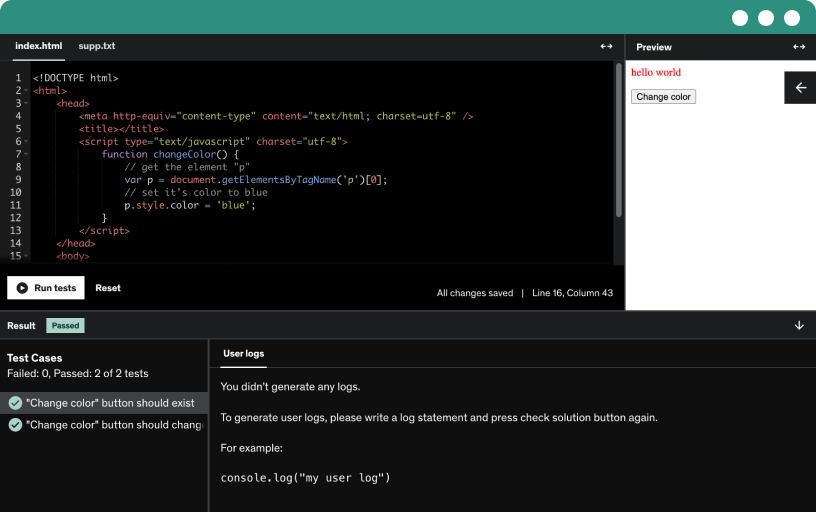
Course content
7 sections • 33 lectures • 3h 17m total length
Requirements
- Good understanding of Web development using HTML, CSS, JavaScript
- Basic knowledge of REST APIs
- Basic understanding of client-server communications
- Basic knowledge of Node runtime environment
- Modern computer with internet access, Node, and npm
Description
This introductory course covers the following technologies: synchronous and asynchronous JavaScript, Node.js/Express.js, jQuery, the event-loop cycle, REST APIs, AJAX, CRUD, HTTP requests, client-server communications. The best approach to know and understand these technologies and their unique role works is by immersing yourself with coding exercises. In this course, we're going to demystify each of these technologies by creating two applications so you will see exactly how they work. You'll learn how to make AJAX calls with various HTTP request methods to perform CRUD operations.
This course takes the following approach:
First, we'll learn the fundamentals of the JavaScript event loop and how asynchronous works.
Next, I walk you through step-by-step how to create a simple Node.js application using Express.js, the most popular server-side JavaScript framework. Together, we'll create our own APIs to perform basic CRUD operations on the server side (back-end).
Finally, we'll switch over to the client side (front-end) and build a clean single page Web app (SPA) using only HTML/CSS/JS and jQuery. We'll deep dive into front-end development and making AJAX calls between our client app and server app.
By the end of this course, you will have a better and deeper understanding how to create your own REST APIs, how asynchronous and AJAX work, and why they're so important in modern Web applications.
Who this course is for:
- Beginner web developers who are curious about full-stack Web development using Node and Express
- Developers who are new to creating REST APIs and making AJAX calls