
Your cart is empty.
Keep shopping
Python Scripting for DevOps: AWS, GitHub, CI/CD with Jenkins
1,293 students
Python Scripting for DevOps: AWS, GitHub, CI/CD with Jenkins
From Coding Fundamentals to Cloud Automation, GitHub Integration, CI/CD Automation with Jenkins and Game Development
Created byShikhar Verma
Last updated 8/2025
English
English [Auto],
What you'll learn
- Python coding practice
- About Data Types in Python
- Regular Expression (regex) in Python
- How to identify and apply keywords in code
- How to declare and assign values to variables.
- The purpose and function of the return statement in functions.
- Python Functions: Definition and Usage
- Utilizing Modules in Function Design
- Organizing Your Code Using Python Packages
- The use of the sys module to access command line arguments
- The different types of operators in Python, including arithmetic, comparison, logical, and assignment operators.
- DevOps Use Cases with if..else..elif
- For/While Loops in Python: Syntax and Usage
- Real-time Use Case: Lists and Exception Handling in Python
- Python Script for Handling Exceptions Using Try Statements
- Integrating Python with GitHub Through the GitHub API
- Cloning a GitHub Repository with Python
- Performing operations on various AWS services like S3, EC2 using Boto3 Python Module
- Launching an EC2 Instance using Boto3 Python Module
- CI/CD Automation with Jenkins and Python
- Integrate GitHub Webhooks With Jenkins
- Develop Games in Python with PyCharm and ChatGPT
Explore related topics
Coding Exercises
This course includes our updated coding exercises so you can practice your skills as you learn.
See a demo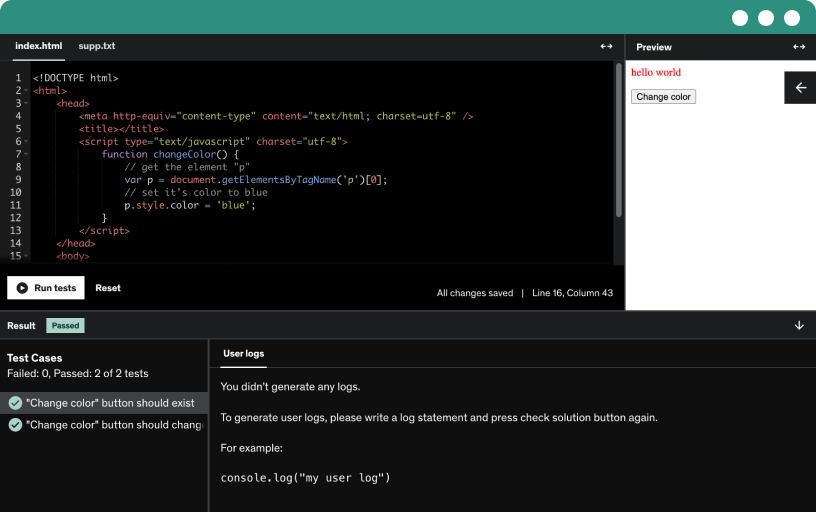
Course content
22 sections • 169 lectures • 9h 30m total length
Requirements
- Basic Computer Skills: Familiarity with using a computer and navigating the internet.
- No Prior Programming Experience Required: This course is designed for beginners, so no previous programming knowledge is necessary.
- Basic Knowledge of DevOps is required
Description
Python for DevOps means using Python to make DevOps tasks easier and more efficient. DevOps is all about automating tasks like building, testing, and deploying software quickly, as well as managing servers and infrastructure.
Python is great for this because it’s simple to learn, and it has many tools and libraries that help automate these tasks.
For example, you can use Python to automatically create servers, manage cloud services, and set up continuous integration and delivery (CI/CD) pipelines. Python helps DevOps teams work faster and more effectively by reducing manual work and making processes smoother.
Course Outline:
Section1: Introduction
-> Introduction
-> An overview of Python
-> About Shell Scripting
-> Python vs. Shell Scripting
-> When to Use Python vs. Shell Scripting
Section2: How to Begin Practicing Python Coding
-> Begin Python Coding Practice
-> Visual Studio Code - Python Coding Practice
-> PyCharm - IDEs
-> Codespaces - Online Coding Platform
Section3: Python Data Types
-> About Data Types in Python
-> Lab - String Data Type
-> Lab - Integer Data Type
-> Lab - Float Data Type
-> Lab - len(), Length of a string
-> Lab - String upper(), lower()
-> Lab - String replace()
-> Lab - String split()
-> Lab - Print specific object in split()
-> About List in Python
-> Lab - List Data Type
-> Lab - Add and Modify in a List Data Type (Mutable)
-> About Tuples in Python
-> Lab - Tuples in Python
-> About Sets in Python
-> Lab - Sets in Python
-> Dictionary in Python
-> Lab - Dictionary in Python
-> Use Cases in DevOps
-> Boolean Data Types
-> Lab - Boolean in Python
-> Coding Exercise 1:Create a Python script to add two integers
-> Coding Exercise 2:Create a python script to perform operation of floating-point
-> Coding Exercise 3:Write a python script to determine the length of a string
-> Coding Exercise 4:Create a python script to convert a string to uppercase and lowercase
-> Coding Exercise 5:Create a Simple python Script to replace a substring within a string
-> Coding Exercise 6:Create a Simple python script to Split the text of a string
-> Coding Exercise 7:Create a python script to define a Variable and assign it a list of five integers
Section4: Regular Expression (regex) in Python
-> Overview of Regular Expressions in Python
-> Lab - Using re. match() to Match Patterns at the Start of a String
-> Lab - Using re. search() to Find Matches Anywhere in a String
-> Lab - Using re. findall() to Search for All Matches in a String
-> Regex Use Cases from a DevOps Perspective
-> Coding Exercise
Section5: Mastering Keywords in Python
-> Overview of Keywords in Python
-> Common Python keywords
-> Mastering Control Flow Keywords - if, else, for, and break
-> Lab: Mastering Control Flow Keywords - continue, def, return, class, import etc.
Section6: Working with Variables in Python
-> Overview of Variables with Example
-> Lab: Working with Float Variables in Python
-> Lab: Defining Lists as Variables in Python
-> Lab: Working with Dictionary Variables in Python
-> Python Variables: Local vs Global Scope
-> Lab: Working with Local Variables in Python
-> Lab: Working with Global Variables in Python
Section7: Return Statement in Python
-> Return Statement: An Overview with Syntax
-> Lab: Creating Functions That Return Values
-> Lab: Functions That Return Multiple Values
-> Lab: Function for Identifying Even and Odd Values
Section8: Python Functions: Definition and Usage
-> Introduction to Functions in Python
-> Advantages of functions in Python
-> Lab: Functions with Parameters
-> Lab: Functions with Return Value
-> Lab: Designing Functions for Basic Arithmetic Operations
-> Comparing Scripts: Using Functions vs. Not Using Functions
Section9: Utilizing Modules in Function Design
-> Introduction to Python Modules
-> An Overview of Built-in Modules
-> An Overview of User-defined Modules
-> Lab: Essential Built-in Modules in Python
-> Lab: OS and Math Modules
-> Lab: Building Your Own Modules
Section 10: Python Packages: Organizing Your Code
-> Introduction to Python Packages
-> Key Concepts of Packages
-> Advantages of Using Packages
-> Lab: Creating Package Structures and Modules
-> Importing Modules for Easier Access using __init__. py
-> Creating a Main Python File to Utilize Your Package
-> Importing Functions from a Package
Section 11: Command Line Arguments in Python
-> Command Line Arguments with Practical Examples
-> Lab: Script to Add Two Numbers (No Command Line Arguments)
-> Lab: Working with sys. argv for Command Line Arguments
-> Lab: Passing Multiple Arguments to Python Scripts
-> Lab: Pass Arguments to Add Two Numbers
-> Lab: Conditional Arithmetic via Script Arguments
-> Lab: Conditional Arithmetic Using Script Arguments
Section 12: Operators in Python: Concepts and Examples
-> The Basics of Arithmetic Operators in Python
-> Lab: Exploring Comparison (Relational) Operators
-> Lab: Comparison Operators (=, >, >=, ==)
-> Logical Operators: and, or, not
-> Lab: Using 'and' , 'or' for Logical Operations
-> Lab: Using 'not' for Logical Operations
-> Assignment Operators in Python
-> Lab: Understanding Different Assignment Operators
-> Membership Operators: 'in' and 'not in'
-> Lab: Using 'not in' Membership Operators
-> Operators in DevOps: Practical Use Cases
-> Use Cases for Operators in the DevOps Workflow
Section 13: Conditional Statements in Python
-> Understanding 'if' statement in Python
-> Understanding 'else'..'elif' statement in Python
-> Lab: Implementing if..else Statements
-> Lab: DevOps Use Cases with if..else..elif
Section 14: Understanding Loops in Python
-> For Loops in Python: Syntax and Usage
-> While Loops in Python: Syntax and Usage
-> Lab: Implementing For Loops
-> Lab: Printing Ranges and Strings with For Loops
-> Lab: Implementing Infinite While Loops
-> Lab: Exploring Break Statements in Python
Section 15: Real-time Use Case: Lists and Exception Handling in Python
-> Introduction to the Real-Time Project
-> Lab: User Input for List Creation
-> Lab: Understanding split function text.split()
-> Lab: Identify modules and their functions
-> Lab: Utilize a for loop to list files
-> Exception Handling with Try Statement
-> Lab: Python Script for Handling Exceptions Using Try Statements
-> Lab: Handling Error - FileNotFoundError
-> Lab: Handling Known Error - PermissionError
Section 16: Integrating Python with GitHub
-> Integrating Python with GitHub Through the GitHub API
-> Lab: Install PyGithub and Generate a GitHub Access Token
-> Lab: Retrieve User Login and Public Repos with Python
-> Lab: Retrieve GitHub Account Repository List
-> Lab: Create a New Repository with Python
Section 17: Cloning a GitHub Repository with Python
-> Clone a Repository Using the Subprocess Module
-> Lab: Clone a Repository with the Subprocess Module
-> Lab: Using GitPython Library
-> Lab: Handle Git Errors with Exception Handling
Section 18: Boto3 Python Module
-> Introduction to the Boto3 Python Module
-> Lab: Install Boto3 and Create an AWS User Account
-> Lab: Configure GitHub Access from Codespaces via AWS CLI
-> Lab: List All Buckets with Boto3-1
-> Lab: List All Buckets with Boto3-2
-> Lab: List All Buckets with Boto3-3
-> Lab: Upload a File to a Bucket Using Boto3
-> Lab: Download a File to a Bucket Using Boto3
Section 19: Launching an EC2 Instance using Boto3 Python Module
-> Project Overview
-> Setting Up a User Account in AWS with IAM
-> Set Up AWS CLI in Codespaces
-> Begin Python Script: Import Boto3
-> Include EC2 Attributes in Python Script
-> Add Tag Specifications in Python Script
-> Debug the Python Script Before Execution
-> Access the EC2 Instance Launched via Python Script
-> Update the Python Script to Add 20GB EBS Volume
-> Run Python Script to Confirm EBS Volume
-> Update Python Script to Include UserData
-> Update Python Script to Include Apache Package
-> Run the Revised Python Script and Validate
-> Access the Apache Server
Section 20: CI/CD Automation with Jenkins and Python
-> Project Overview
-> Set Up a GitHub Repository for Your Project
-> Write the Source Code in Python and Push to GitHub Repository
-> Provision a Jenkins Server Instance in AWS
-> Connect to the Jenkins Server and Install Java
-> Install the Jenkins Package on the Server
-> Set Up Jenkins Configuration
-> Install Necessary Plugins on the Jenkins Server
-> Add GitHub Credentials to the Jenkins Server
-> First Stage of the Pipeline: Checkout the Project
-> Build the Job
-> Add a Stage for Installing Python Dependencies
-> Add a Stage to Execute the Python Script
-> Setting Up a User Account in AWS with IAM
-> Create Access Keys for Jenkins Credentials
-> Set Up Access Keys in Jenkins Pipeline
-> Export AWS Credentials in Jenkins Pipeline
-> Build the Job and Verify EC2 Instance Creation in AWS
-> Access the Web Server Using URL
Section 21: Integrate GitHub Webhooks With Jenkins
-> Setup GitHub Webhooks in Jenkins
-> GitHub hook trigger for GITScm polling
-> Add Jenkins Webhook to GitHub Repository
-> Test the Webhook by Editing the Python Script
Section 22: Develop Games with Python using PyCharm and ChatGPT
Who this course is for:
- Individuals with little or no prior programming experience who want to learn Python from scratch.
- DevOps Professionals: Anyone interested in automation, cloud computing, and using Python for DevOps practices.
- Students and Professionals: Anyone seeking to enhance their resume or career prospects by adding Python programming to their skill set.
- Overall, this course is suitable for anyone eager to learn Python and apply it in real-world scenarios.