

Your cart is empty.
Keep shoppingPython One-Liners: Write Powerful Code in a Single Line
2,804 students
Python One-Liners: Write Powerful Code in a Single Line
Master Python One-Liners: Write Clean, Powerful Code in a Single Line Using Real Examples and Projects
Created byNeamatullah Ekhteyari
Last updated 7/2025
English
English [Auto],
What you'll learn
- Master the art of writing powerful code in just a single line.
- Convert Multi-line Logic into Elegant One-Liners
- Work with Lists, Tuples, Sets, and Dictionaries Efficiently
- Manipulate Strings Like a Pro
- Use Functional Programming Techniques
- Solve Common Algorithms in One Line
- Handle Files and Read/Write Operations with One-Liners
- Perform Data Analysis Tasks Simply and Quickly
- Master Python Tricks and Shortcuts
- Think Like a Pythonic Programmer
Explore related topics
Coding Exercises
This course includes our updated coding exercises so you can practice your skills as you learn.
See a demo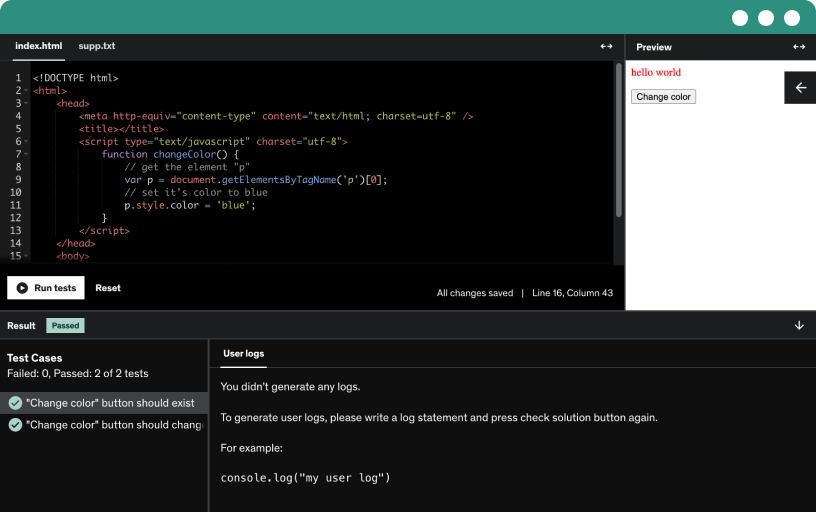
Course content
7 sections • 27 lectures • 2h 11m total length
Requirements
- Basic Knowledge of Python
- Any Code Editor Installed
- Python Installed on Your Computer
- A Computer or Laptop (Windows, macOS, or Linux)
- No Advanced Programming Needed
Description
Welcome to "Python One-Liners: Master Code Magic!"—a unique and practical course designed to take your Python skills to the next level using concise, elegant one-liners.
Python is known for its readability and simplicity. But did you know you can write powerful, efficient code in just one line? Whether you’re a beginner looking to boost your coding confidence or an experienced developer wanting to write cleaner code, this course is for you.
We’ll start with the basics and gradually move to advanced one-liners that cover:
String and list manipulations
Dictionary and set operations
Functional programming with map(), filter(), reduce(), and lambda
Real one-liner algorithms and tricks
File operations and data handling
Daily problem-solving using one-liners
Each lecture is packed with examples, hands-on explanations, and comparisons between traditional and one-liner code styles. You’ll also get downloadable resources, scripts, and cheat sheets to accelerate your learning.
By the end of the course, you’ll be able to write shorter, smarter, and more efficient Python code — making your scripts faster to write and easier to maintain.
You’ll gain skills that are practical, reusable, and valuable for real-world programming challenges.
Join us now and start writing Python code like a pro — in just one line!
Who this course is for:
- Beginner to Intermediate Python Developers
- Anyone Who Wants to Improve Their Coding Style
- Students Preparing for Coding Interviews
- Busy Developers & Data Analysts
- Project Builders & Automation Enthusiasts
- Anyone Curious About Writing Less and Doing More with Python