
Your cart is empty.
Keep shopping
Python AI Automation: Deploy LLMs, TTS, Agents and OCR Tools
New
1 students
Python AI Automation: Deploy LLMs, TTS, Agents and OCR Tools
Build real-world Python automation: deploy LLMs, TTS, OCR, AI agents, browser agent, YouTube OSINT and media generators.
Created byIrfan Azmat
Last updated 10/2026
English
What you'll learn
- Deploy the Cinematic Render Engine using Python's subprocess module.
- Set up and deploy Large Language Models (LLMs) using automated Python scripts.
- Run OpenSora for AI video generation through automated Python pipelines.
- Build an LLM-powered Multiple Choice Question (MCQ) generation pipeline.
- Deploy SDXL Lightning for fast, automated image generation.
- Automate Qwen Studio for text-to-speech generation.
- Implement AudioLDM for automated audio generation.
- Run LocalLLMs efficiently on your own local machine.
- Automate LuxTTS for high-quality, scalable voice synthesis.
- Set up VoiceStudio in Google Colab for realistic voice cloning.
- Deploy Supertonic TTS for fast, automated speech generation.
- Build an automated media processing pipeline in Python.
- Build a YouTube comment intelligence platform using NLP and LDA topic modeling.
- Create dynamic OSINT network graphs to identify key actors from comment data.
- Engineer an AI FaceSwap studio using Colab GPU acceleration.
- Deploy the Ael-Coder-1.5B model for automated code generation.
- Optimize Ael-Coder performance and best practices on T4 GPUs.
- Set up long-horizon OCR models using SGLang.
- Tune DPI and page filters for optimal OCR text extraction.
- Deploy Qwen3 Browser Agents with action-only supervision.
Explore related topics
Coding Exercises
This course includes our updated coding exercises so you can practice your skills as you learn.
See a demo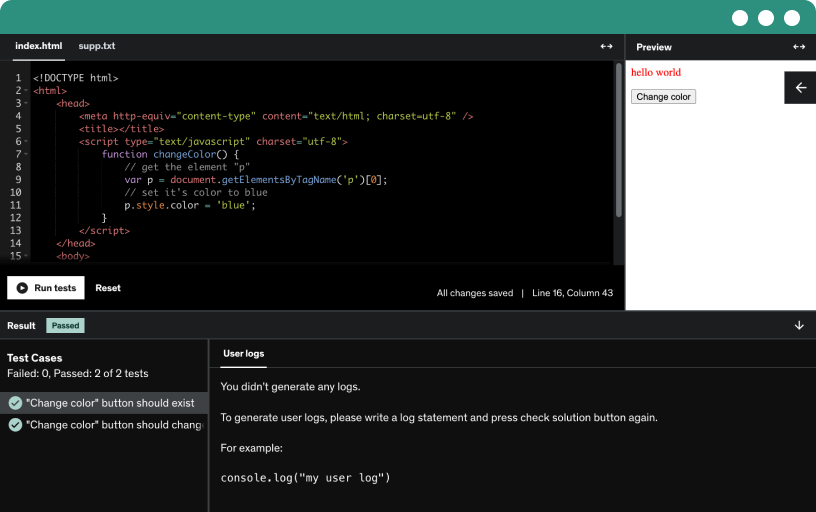
Course content
4 sections • 27 lectures • 7h 18m total length
Requirements
- Basic Python knowledge is helpful. A free Google account (for Colab) is required. No prior AI or machine learning experience is needed.
Description
AI DISCLOSURE — PLEASE READ FIRST
This course was developed with the assistance of artificial intelligence. AI tools were used to help draft, structure, and organize portions of the curriculum, lecture outlines, technical explanations, code scaffolding, and supporting written materials. All topics, sequencing decisions, accuracy checks, and final quality review were carried out by the instructor. This disclosure is placed at the very beginning of the course so that every learner can make a fully informed decision before enrolling. If you have questions about how AI was used in the creation of this material, please ask in the course Q&A before you purchase.
Python AI Automation: Deploy LLMs, TTS, Agents and OCR Tools
The world of artificial intelligence is moving faster than ever, but there is a massive gap between watching AI tutorials and actually deploying AI tools in a real environment. Many courses teach you the theory behind machine learning or show you how to build a simple chatbot, but they leave you stranded when it comes to running state-of-the-art models on your own hardware or in the cloud. This course was built to bridge that exact gap. We do not just talk about AI; we deploy it. We write Python code that orchestrates, manages, and automates a massive ecosystem of cutting-edge AI models.
If you are ready to move beyond basic scripts and start engineering real-world AI automation pipelines, this is the course for you. We will dive deep into Large Language Models (LLMs), Text-to-Speech (TTS) synthesis, AI-powered media generation, Open Source Intelligence (OSINT), Optical Character Recognition (OCR), and autonomous Browser Agents. By the end of this journey, you will have a portfolio of deployed AI tools and the Python skills to automate them.
The Problem This Course Solves
Most AI enthusiasts run into the same roadblock: they find an incredible open-source model on Hugging Face or GitHub, but they struggle to get it running. They hit dependency conflicts, run out of VRAM, or get lost in the labyrinth of API keys and cloud configurations.
This course solves that problem by focusing entirely on deployment and automation. You will learn how to use Python to tame these complex models. You will learn how to use subprocess to orchestrate cinematic render engines, how to optimize VRAM footprints on a T4 GPU, and how to build robust fallback extraction engines for data pipelines. We focus on memory-constrained environments like Google Colab, ensuring that you can follow along for free, regardless of whether you have a powerful local GPU.
What You Will Learn
This is a massive, all-in-one bootcamp. Here is a detailed breakdown of the AI domains and tools you will master:
1. Large Language Models (LLMs) and Text Generation
You will learn how to deploy and interact with Large Language Models programmatically. We start with LLM deployment strategies, showing you how to run models efficiently. You will build an LLM-powered MCQ (Multiple Choice Question) generation pipeline, demonstrating how to use LLMs for automated content creation. We also dive into local LLM deployment, teaching you how to run models on your own machine without relying on external APIs, and we explore the Ael-Coder-1.5B model, learning how to install it and optimize its performance on a T4 GPU.
2. Text-to-Speech (TTS) and Voice Synthesis
Voice AI is exploding, and this course covers the best tools available. You will automate Qwen Studio for TTS generation. You will work with LuxTTS to generate high-quality, scalable speech. You will deploy Supertonic TTS for rapid speech generation, and you will set up a complete Real Voice Studio in Google Colab, allowing you to experiment with voice cloning and realistic synthesis. You will learn how to manage audio generation pipelines efficiently in Python.
3. Media Generation (Video, Image, Audio)
We cover a wide spectrum of generative media. You will deploy OpenSora for AI video generation. You will use SDXL Lightning for ultra-fast image generation. You will implement AudioLDM for automated audio and sound effect generation. We also cover a complete AI FaceSwap Studio, teaching you the engineering breakdown of how to run FaceSwap on a Colab GPU for both images and video, including voice swapping. You will also build a generalized Media Pipeline to manage these assets programmatically.
4. YouTube OSINT and Data Intelligence
This section is a deep dive into data extraction and NLP. You will build a professional-grade YouTube Comment Intelligence Platform from scratch. You will implement fallback extraction engines using yt-dlp and youtube-comment-downloader to scrape thousands of comments. You will then analyze this data using Natural Language Processing (NLP) with VADER for sentiment analysis. Furthermore, you will deploy AI-driven topic modeling via Latent Dirichlet Allocation (LDA) to discover hidden themes in the comments. Finally, you will build dynamic OSINT network graphs to identify key actors and generate enterprise-ready data exports.
5. Unlimited OCR and Document AI
Optical Character Recognition (OCR) is essential for automating document workflows. You will learn how to deploy a long-horizon OCR model using SGLang. You will dive into single-image inference, learning how to choose the right DPI for optimal accuracy. You will build page filters and learn text formatting techniques to achieve high-fidelity extraction. We will also discuss failure modes and how to evaluate OCR models in a production environment, covering multilingual OCR and the future of Document AI.
6. Autonomous Browser Agents
The future of automation is agents that can browse the web for you. You will work with the Qwen3 Browser Agent. You will learn about action-only supervision and how to disable "thinking mode" to save on VRAM. You will assemble the canonical action and perform a VRAM footprint analysis. You will benchmark performance on a T4 GPU, explore larger agent-specific models, and understand the future trends of autonomous browser automation.
Course Curriculum Overview
Section 1: Introduction and Media Pipelines
This section kicks off with the Code Mechanics of deploying a Cinematic Render Engine via subprocess. From there, we move rapidly through LLM deployment, OpenSora, the LLM MCQ Pipeline, SDXL Lightning, and Qwen Studio. We cover AudioLDM, LocalLLM, LuxTTS, VoiceStudio, and Supertonic TTS. You will build a MediaPipeline and then dive into the massive YouTube Comment Intelligence Platform (Parts 1 and 2), where we extract, clean, and visualize thousands of data points. We conclude Section 1 with the AI FaceSwap Studio engineering breakdown.
Section 2: AEL Coder
Here, we focus on the Ael-Coder-1.5B model. You will learn its introduction, work through an example, complete the installation, and learn best practices for loading the code and optimizing performance on a T4 GPU.
Section 3: Unlimited OCR
This section is dedicated to Long-Horizon OCR. We cover model card anatomy, installation verification, and single-image inference. You will learn about SGLang setup, DPI sliders, page filters, and text formatting. We also cover hardware sizing, LoRA adapter failure modes, confidence without logprobs, and a production case study.
Section 4: Qwen3 Browser Agent
The final section focuses on autonomous agents. You will learn the stack introduction, action-only supervision, and legacy quantization. We cover K-Quants, installation paths, the "thinking mode" trap, and how to assemble the canonical action. We finish with performance benchmarks on a T4 GPU and a look at the future of AI agents.
Who This Course Is For
This course is designed for Python developers, data scientists, AI enthusiasts, and IT professionals who want to move from theory to practical deployment. If you have basic Python knowledge and want to build a career in AI engineering, this course is your launchpad. It is also perfect for hobbyists who want to automate their own workflows, generate content, scrape data, or build autonomous agents without spending a fortune on cloud infrastructure.
Requirements
Basic Python programming knowledge (variables, loops, functions, and basic libraries).
A free Google Account to access Google Colab.
A willingness to experiment and debug code (AI deployment is not always a one-click process).
No prior machine learning or advanced math experience is required. We focus on engineering and deployment, not training models from scratch.
Why Take This Course?
Because AI is not just about reading papers; it is about building things. This course gives you the exact code, the exact blueprints, and the exact workflows to deploy some of the most exciting AI models available today. You will not just learn what an LLM is; you will deploy one. You will not just read about OSINT; you will build a comment intelligence platform. You will not just watch videos of browser agents; you will configure one on a T4 GPU.
By the end of this course, you will have a deep, practical understanding of the modern AI automation landscape. You will be able to take any open-source model, wire it up with Python, and integrate it into your own projects. Join me on this journey, and let's turn Python into your ultimate AI automation engine.
Who this course is for:
- Python developers, data enthusiasts, and tech hobbyists who want to practically deploy LLMs, TTS, OCR, and AI agents using free cloud tools.