
Your cart is empty.
Keep shopping
MLOps Bootcamp: Deploy, Automate & Monitor ML in Production
91 students
MLOps Bootcamp: Deploy, Automate & Monitor ML in Production
Build a production-grade ML system — DVC, MLflow, FastAPI, Docker, CI/CD, cloud deploy & drift monitoring.
Created byVaibhav Kumar Singh
Last updated 7/2026
English
What you'll learn
- Take an ML model from a notebook to a live, monitored cloud service
- Version data and experiments with DVC and MLflow
- Serve models with FastAPI + Docker and deploy them to the cloud
- Automate testing, training and deployment with GitHub Actions (CI/CD)
- Detect data and concept drift and monitor models with Evidently, Prometheus & Grafana
- Build a complete, portfolio-ready end-to-end MLOps project
Explore related topics
Coding Exercises
This course includes our updated coding exercises so you can practice your skills as you learn.
See a demo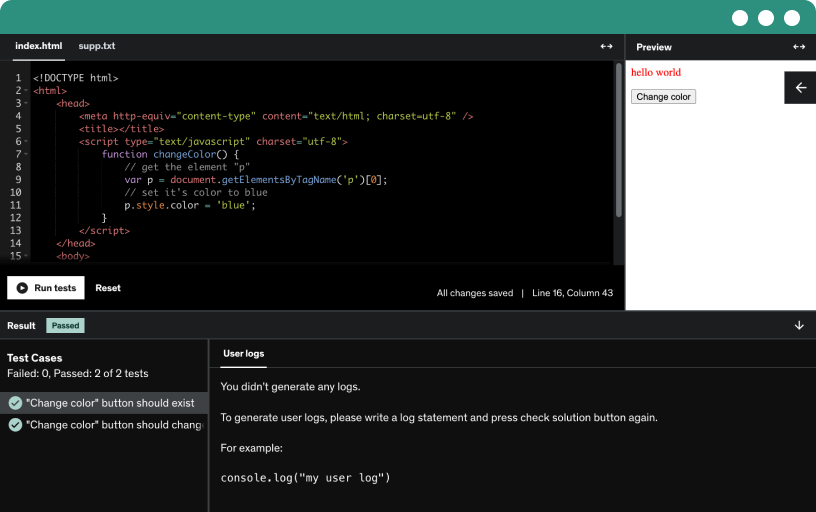
Course content
10 sections • 41 lectures • 43m total length
Requirements
- Basic Python and a little machine-learning familiarity (you've trained a model before)
- No prior DevOps, Docker, or cloud experience needed — we teach it from scratch
- A computer where you can install free tools (Python, Docker, Git)
Description
This course contains the use of artificial intelligence.
87% of machine learning models never reach production. This course makes sure yours do.
Most ML learning stops at "the model works in my notebook." Real jobs begin exactly where that stops. MLOps — Machine Learning Operations — is the discipline of taking a model from a notebook to a reliable, automated, monitored service in production. It's the highest-leverage skill in the ML job market right now, and this course teaches it end to end.
You won't just watch. You'll build a complete, production-grade MLOps system, piece by piece, using 100% free and open-source tools.
What you'll build and master:
• Reproducibility — version your data with DVC and track every experiment with MLflow
• Pipelines — turn messy notebooks into clean, config-driven training pipelines
• Serving — wrap your model in a FastAPI service and containerize it with Docker
• CI/CD — test data, models and APIs automatically with GitHub Actions
• Deployment — ship your container to the cloud with safe rollout strategies
• Monitoring — catch data and concept drift with Evidently, and watch health on Grafana
• Capstone — assemble it all into one end-to-end system that retrains itself
Why learn it here: I'm a working Machine Learning Engineer. I teach the exact, current workflow real teams use — no theory dumps, no filler. Every tool is free, so nothing stops you from following along.
By the end, you'll have a portfolio project that proves — to any employer — that you can take machine learning all the way to production. That's the difference between a candidate who talks about ML and one who ships it.
Full Q&A support and a 30-day money-back guarantee. Enroll now, and let's get your models into production.
Who this course is for:
- Data scientists who can build models but can't yet deploy them
- Python / ML engineers who want to move into MLOps
- Software and DevOps engineers entering machine learning
- Students and job-seekers who want a real, deployable portfolio project