
Your cart is empty.
Keep shopping
3 IoT Projects in 1 Course: From Beginner to Advanced | 2026
17,094 students
3 IoT Projects in 1 Course: From Beginner to Advanced | 2026
Build a Home Automation System and Automatic Garden Lights using Tinker Board, Python, and IoT Dashboard
Created byStepwise Learning ., Technical Support Team
Last updated 6/2026
English
What you'll learn
- Understand the ASUS Tinker Board's hardware specifications and how it compares to Raspberry Pi in performance and capability.
- Burn the OS image to a microSD card and make it fully bootable for first-time setup.
- Assemble the Tinker Board with essential hardware components and use it as a fully functional Linux PC.
- Access the Tinker Board's Linux terminal remotely from any Windows PC using PuTTY over SSH.
- Master the most important Linux commands used in daily embedded development through practical, real-world examples.
- Remotely access the full Tinker Board graphical desktop on Windows using virtual computing — no monitor needed.
- Understand the GPIO pin layout and write Python code to control connected hardware components programmatically.
- Connect LEDs and a buzzer to the Tinker Board and control them through Python scripts as your first physical computing project.
- Build a fully automatic garden lighting system that turns on at sunset and off at sunrise using sensors and Python logic.
- Create a complete IoT-based Home Automation system that controls 4 home appliances remotely from anywhere in the world.
- Transfer files seamlessly between a Windows PC and the Tinker Board using FTP for efficient project file management.
Explore related topics
Coding Exercises
This course includes our updated coding exercises so you can practice your skills as you learn.
See a demo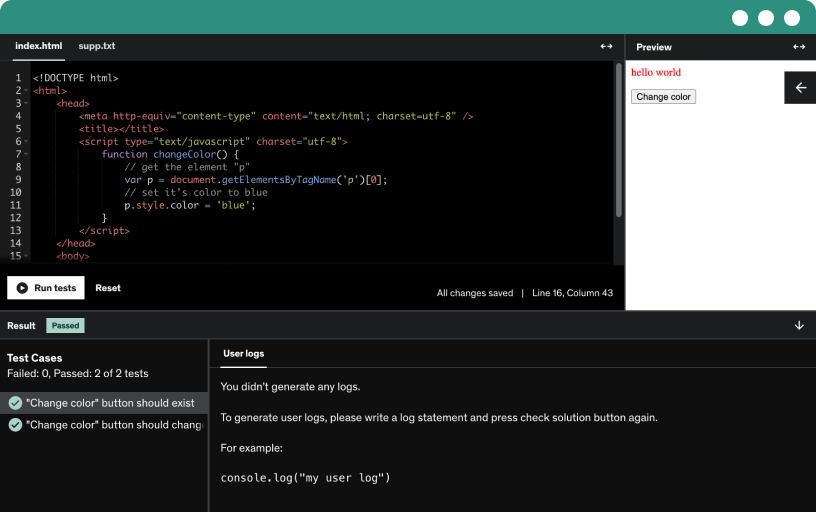
Course content
10 sections • 39 lectures • 2h 15m total length
Requirements
- Basic computer skills such as installing software and managing files — no programming or electronics experience needed.
- No prior Linux, Python, or GPIO experience required — every concept is taught from scratch inside the course..
- An ASUS Tinker Board, a microSD card, and a Windows laptop — the complete hardware and software list is provided in the first lecture.
- A stable internet connection to download software, tools, and course resources during setup.
Description
What If You Could Control Your Home From Anywhere in the World — Using a Board You Programmed Yourself?
That is exactly what you will be able to do by the end of this course. You will build a real home automation system, an automatic garden lighting project, and a fully configured Linux-based single-board computer — all from scratch, all with your own hands.
This is the most comprehensive hands-on course available for the ASUS Tinker Board — and it was built for complete beginners.
Why the Tinker Board?
The ASUS Tinker Board is more powerful than Raspberry Pi, yet most learners have never touched one. This course changes that. You will learn to harness its full potential — from first boot to advanced IoT automation — in a structured, beginner-friendly environment that leaves nothing unexplained.
What You Will Build:
Two complete real-world projects that you can actually use:
Project 1 — Automatic Garden Lights A smart lighting system that turns on at sunset and switches off at sunrise — automatically, every day, without a single manual command.
Project 2 — Home Automation System Control your home appliances remotely over the internet — from another room, another city, or another country. This is real IoT, running on hardware you built and programmed yourself.
What You Will Learn — Section by Section:
Introduction to Tinker Board Understand your hardware inside out — its specifications, capabilities, and how it compares to other single-board computers including Raspberry Pi.
Operating System Setup and Configuration Install the OS, configure your SD card, and set up your Tinker Board as a fully functional Linux PC — ready for development from day one.
Essential Linux Commands Learn the most important Linux terminal commands explained with practical, real-world examples. You will be comfortable with the command line before moving to hardware.
Remote Access and GUI Applications Access the Tinker Board desktop remotely without a monitor. Explore built-in applications and learn how to interact with GPIO pins from a graphical interface.
Physical Computing with LEDs and Buzzers Connect real electronic components, understand the GPIO pin layout, and write Python code that controls hardware — your first step into embedded systems.
Automatic Garden Lights Project Build a complete automation project from scratch. Learn the logic behind environment-based hardware control and make your system respond to real-world conditions.
Home Automation System — IoT Project Build a smart home controller using IoT technology. Control appliances remotely over the internet and monitor your system from any device, from anywhere in the world.
File Transfer and Course Recap Learn to move files seamlessly between your computer and Tinker Board. Review all key concepts and projects to solidify everything you have learned.
Why Students Choose This Course:
Works on All Versions of Tinker Board No need to worry about hardware compatibility — the course content applies across all Tinker Board models.
Learn by Building, Not Just Watching Every section ends with something real — a configured system, a working circuit, or a deployed project. You are always making progress you can see and touch.
Beginner-Friendly from the Very First Lecture No prior electronics, Linux, or programming experience needed. Basic computer knowledge is all you need to get started.
English Subtitles on Every Lecture Clear, accessible learning for students from every background.
24-Hour Technical Support Post your question in the Q&A section and receive a clear, actionable response within 24 hours — Monday to Saturday. Technical challenges will never stop your progress.
30-Day Money-Back Guarantee Your enrollment is completely risk-free. If this course does not meet your expectations for any reason, request a full refund within 30 days — no questions asked, no explanations needed.
The skills you gain here extend far beyond the Tinker Board.
Linux, Python, GPIO programming, IoT integration, and remote access are foundational skills used in robotics, industrial automation, smart home development, and embedded product design. Every concept you learn in this course transfers directly to real-world applications.
Who this course is for:
- Anyone curious about the ASUS Tinker Board and how it compares to Raspberry Pi in real-world performance and project capability.
- Complete beginners with no electronics or programming background who want to build real IoT and physical computing projects from scratch.
- Makers and hobbyists who want to build a working home automation system that controls real appliances remotely over the internet.
- Students and professionals looking to gain hands-on experience with Linux, Python, GPIO programming, and IoT — all in one structured course.