
Your cart is empty.
Keep shopping
ANNs and DNNs 0 to 100 | Python | Machine Learning | AI
38 students
ANNs and DNNs 0 to 100 | Python | Machine Learning | AI
Linear Classifier | SVM | Regularization | Softmax | Gradient Descent | Backpropagation | DNN | Dropout | CNN
Created byGhazal Lalooha
Last updated 2/2025
English
English [Auto],
What you'll learn
- Linear Classification
- Cost function of multi-class SVM
- Overfitting and Regularization
- Softmax cost function
- Cost function optimization
- Gradient Descent Algorithm
- Back Propagation Algorithm
- Multi-layer artificial neural networks
- Deep Neural Networks
- Problem Solving with Artificial Neural Networks
- Advanced Optimization methods
- Drop out usage in DNN training
- CNN
Explore related topics
Coding Exercises
This course includes our updated coding exercises so you can practice your skills as you learn.
See a demo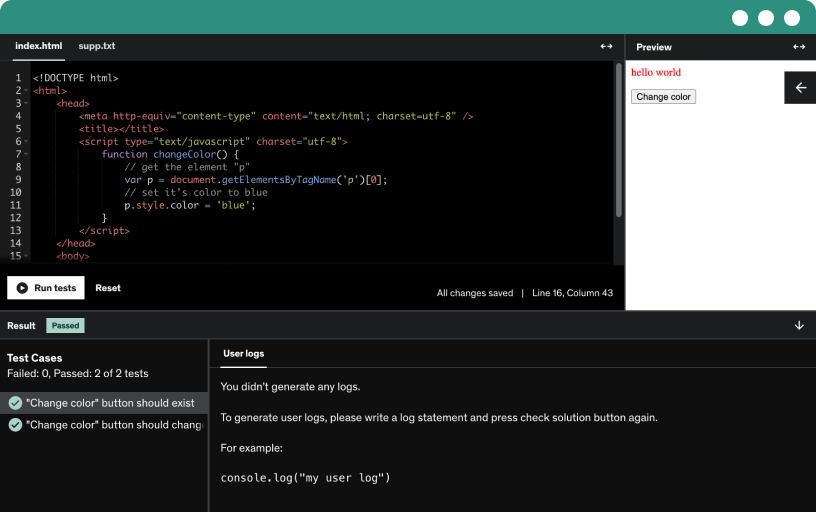
Course content
3 sections • 17 lectures • 4h 42m total length
Requirements
- familiarity with Python programming language
- basic familiarity with Machine Learning
Description
Embark on a comprehensive journey to master Artificial Neural Networks (ANNs) and Deep Neural Networks (DNNs) with my expertly structured course. Designed for both beginners and those looking to deepen their understanding, this course offers a blend of theoretical concepts and practical coding exercises in Python.
Key Topics Covered:
Linear Classifiers: Understand the foundation of classification algorithms and their role in machine learning.
Support Vector Machines (SVM): Dive into SVMs, the powerful supervised learning models used for classification and regression.
Overfitting and Regularization: Learn how to identify overfitting in your models and techniques to regularize and prevent it.
Softmax: Master the Softmax function for multi-class classification problems.
Gradient Descent: Grasp the optimization method crucial for training neural networks.
Backpropagation: Gain insight into the algorithm that adjusts weights in the network to minimize error.
Deep Neural Networks (DNNs): Explore advanced architectures and how they can vastly improve model performance.
Dropout: Implement dropout techniques to prevent overfitting in deep learning models.
Convolutional Neural Networks (CNNs): Delve into CNNs for image processing and other applications.
Course Features:
Comprehensive **Python coding files** and references are provided to enhance hands-on learning.
Detailed explanatory sessions combined with practical assignments.
Step-by-step guidance through each topic, ensuring a solid understanding of basic concepts to advanced techniques.
By the end of this course, you will possess a robust understanding of both theoretical and practical aspects of neural networks, equipped to tackle complex machine learning challenges with confidence.
Join now and transform your understanding of ANNs and DNNs from 0 to 100!
Who this course is for:
- everyone who wants to get promotion in his job(in every field of work)