
Your cart is empty.
Keep shopping
C Programming Fundamentals with Practical Examples
Role Play
19,673 students
C Programming Fundamentals with Practical Examples
Learn C programming concepts, syntax, and problem solving through hands-on examples and practical coding exercises
Created byFaisal Zamir, Jafri Code
Last updated 7/2026
English
English [Auto],
What you'll learn
- Understand the fundamentals of programming and the syntax of the C language.
- Write simple to complex C programs using loops, decision-making statements, and functions.
- Handle data types and variables, and use them effectively in C programs.
- Use arrays, structures, and pointers to manipulate data in a C program.
- Implement file handling concepts to read and write data from/to files.
- Implement string operations and understand the concept of typecasting.
- Use header files to organize and reuse code.
- Debug programs to identify and fix issues.
- Prepare for further studies in computer science, software engineering, or a related field.
Explore related topics
Coding Exercises
This course includes our updated coding exercises so you can practice your skills as you learn.
See a demo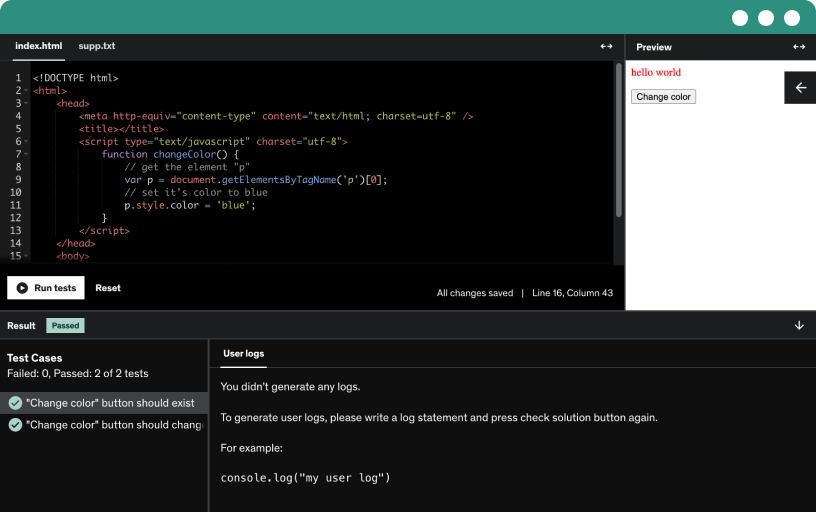
Course content
10 sections • 35 lectures • 3h 6m total length
Requirements
- You did not need to buy any software or other course
- You did not need to have programming background
Description
Learn C Programming in One Day – Start Coding with Confidence
Do you think learning C programming or C is difficult? With the right guidance, hands-on projects, and structured learning, you can start coding confidently in C programming language in just one day. This course is designed for beginners who want a practical, engaging, and comprehensive introduction to C, giving you the foundation to explore more advanced topics like game development or embedded C.
Whether you’re a student, a beginner programmer, or someone looking to strengthen your coding foundation, this course will give you the confidence to write your first C programs and build mini projects by the end of the day.
How This Course Is Structured
To make learning effective, the course is divided into three focused sessions:
Morning Session: Introduction to C programming, environment setup, writing your first "Hello World" program, input/output, variables, constants, and data types.
Afternoon Session: Decision-making, loops, functions, arrays, and pointers. These concepts help you control program flow and manage data effectively.
Evening Session: Advanced topics including strings, type casting, file I/O, and header files, preparing you to write complete and functional programs.
This session-based structure ensures you master each concept before moving on, building confidence step by step.
Hands-On Projects Included
Learning by doing is the fastest way to master programming. This course includes practical C mini-projects:
Greeting Generator
Simple Calculator
Grade Calculator
Number Pattern Generator
String Reverser
Pointer-Based Array Operations
By completing these projects, you’ll see how C programming concepts are applied in real scenarios, making your skills stronger and preparing you for applications in game development or embedded C projects.
Why Enroll Today?
Success in programming comes from practice, not theory. This course gives you both the knowledge and motivation to start coding today. Completing this one-day course will prepare you to continue learning, explore embedded C, develop simple games, or tackle more advanced programming challenges.
Benefits of This C Programming Course
Comprehensive Learning: Covers all essential topics from syntax and data types to advanced pointers and file handling.
Practical Approach: Learn by doing with examples, exercises, and real projects.
Expert Instruction: Taught by experienced instructors passionate about helping you succeed.
Flexibility: Learn at your own pace, anytime and anywhere.
Career Opportunities: Opens doors in software development, system programming, game development, and more.
Take action today. By the end of the day, you’ll already be writing C programs confidently and ready to explore more advanced topics.
Thank you,
Faisal Zamir
Who this course is for:
- Beginners who have no prior knowledge of C programming and want to learn it from scratch.
- Students pursuing a degree in computer science or related fields who need to learn C programming as part of their coursework.
- Professionals who want to enhance their programming skills and add C programming to their skill set.
- Experienced programmers who want to learn C programming to develop low-level applications such as system software, drivers, and embedded systems.
- Anyone who wants to learn C programming for personal growth and to explore the world of programming.